

My Journey Through Surface Design Immersion 2026 with Bonnie Christine
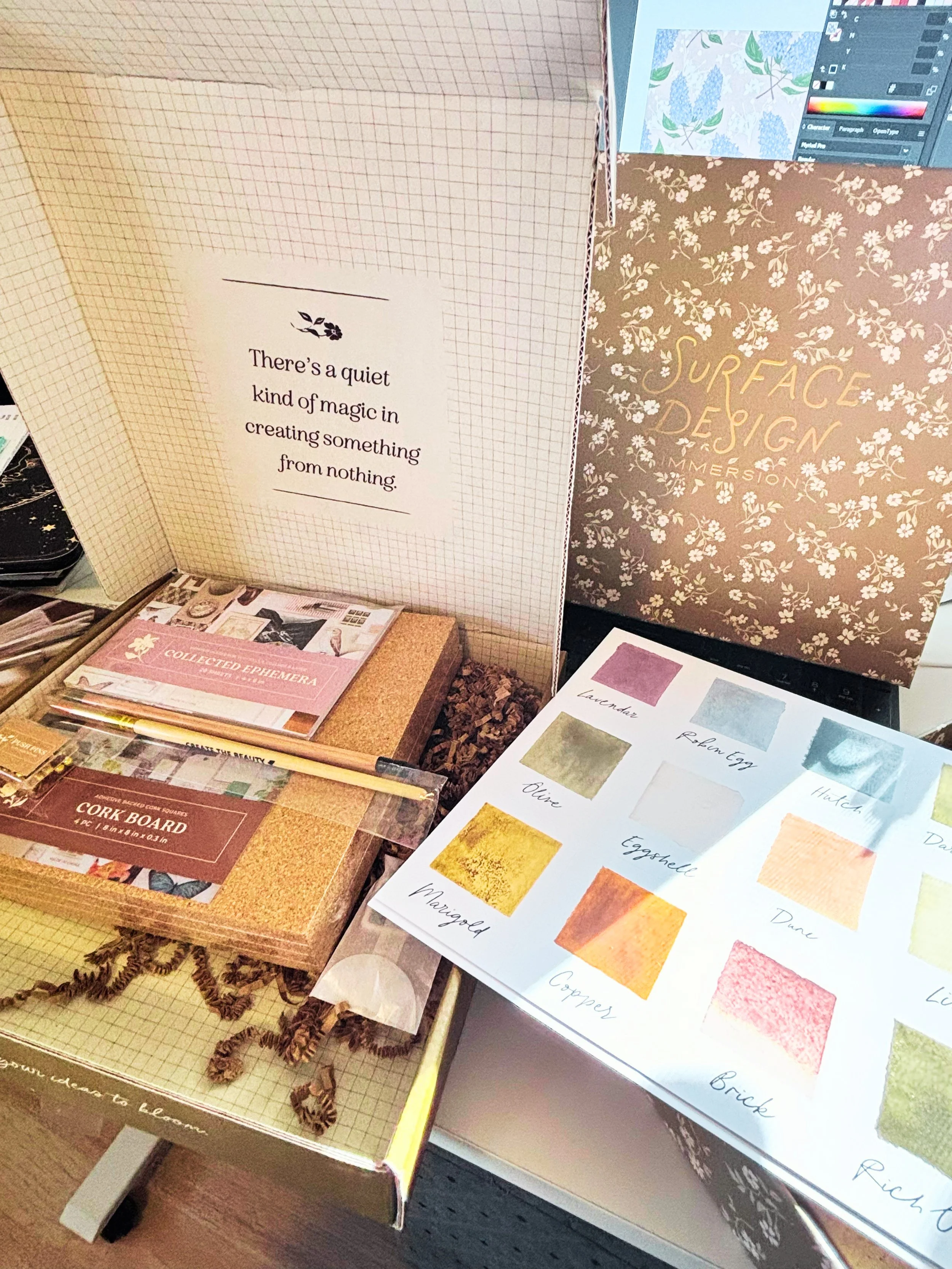
There are certain seasons in life that quietly change everything.
For me, that season began when I enrolled in Surface Design Immersion 2026 this past Spring with Bonnie Christine. At the time, I came into the course with years of seasoned graphic design experience. I knew I loved creating art. I loved flowers, vintage-inspired details, and illustrating designs that made people feel something. But I didn't yet know how all of those pieces fit together—or how to turn them into a body of work that truly felt like me. I’ve always wanted to put my art out into the world. I just didn’t know where to start, what to do, or how to approach it.
I wasn't looking for someone to tell me what to create. I was looking for direction, guidance, confidence, and a path forward. Looking back now, Surface Design Immersion became so much more than an online course. It became the place where I finally found my artistic voice and my signature style.
Before Surface Design Immersion
Like many artists, I spent years experimenting. I'd try one style, then another. Dabbling here and there between brand identity design and graphic design. Last year, I started creating single patterns based on the latest trending designs which was a lot of fun and it gave me a good starting point. I even opened an Etsy shop and sold my patterns there. However, I burned out pretty quickly because chasing trends grew to become a chore. Etsy is full time work in itself, and it just didn’t seem as profitable for me then to continue keeping up with. My shop is still open and occasionally I receive a random sale from trending art I created last year. That’s not to say that the patterns I created before Immersion weren’t bad designs. I believe each one still has it’s own style and place in the world.
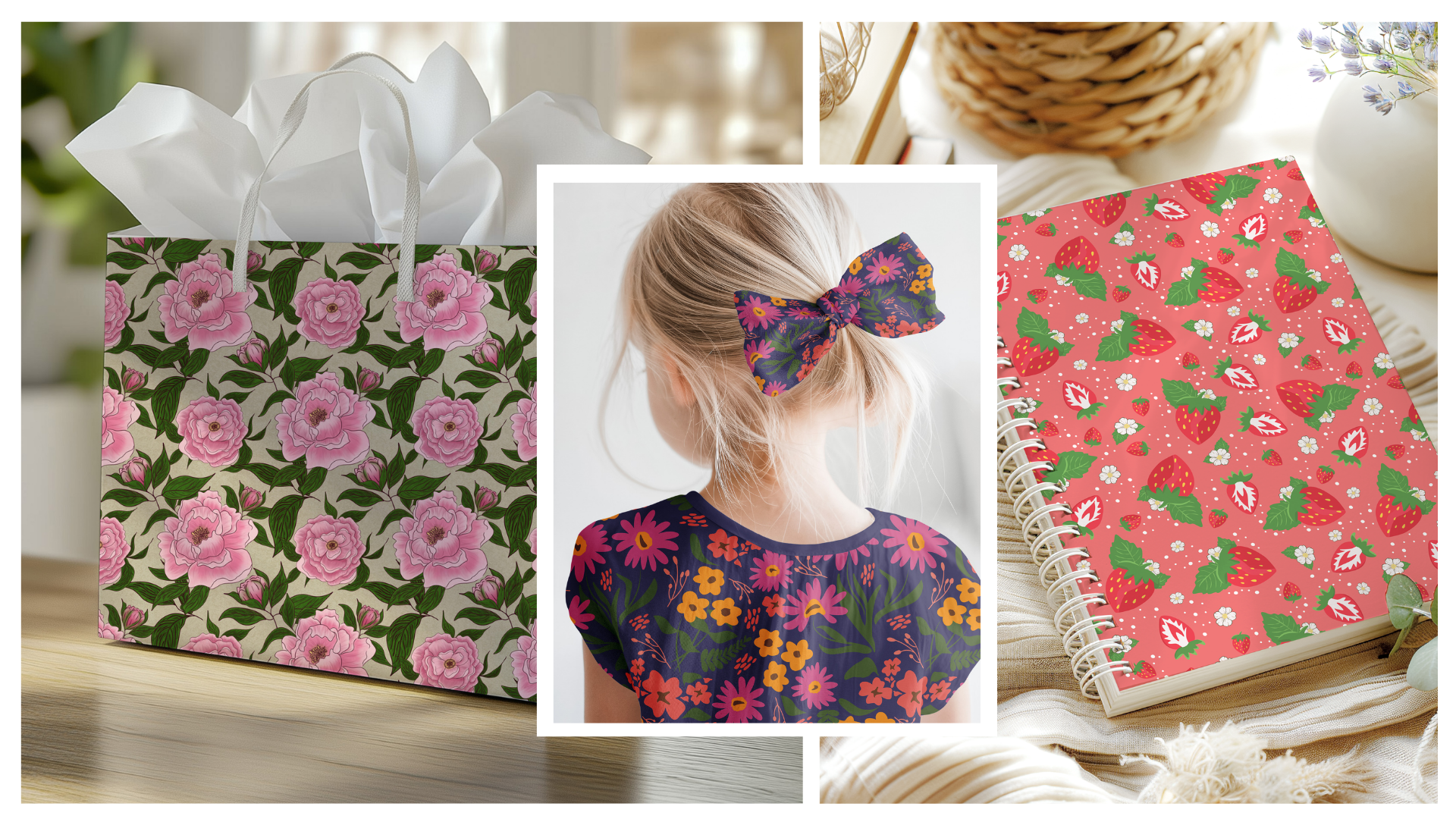
I'd admire other artists and wonder why my work never felt as cohesive as theirs. I knew what I liked, but I struggled to create patterns that looked unmistakably like it came from me. The trending art was making me blend in with everyone else.
In the back of my mind for years, I always wanted to create floral art, but at the same time I do still love creating bright and colorful art seen in the big stores we all love visiting. Flowers, nature, and being outdoors is where I naturally gravitate so it made sense for me to make art focused on these elements.
I think that's one of the hardest parts of becoming an artist. It’s not about learning the software, not using the online world as inspiration, not even designing patterns. It's learning to trust yourself enough to create work that reflects who you are instead of what everyone else is doing as well as to create art with intention, strategy, and purpose.
Learning More Than Design
One of the things I appreciated most about Bonnie Christine's teaching style was that she didn't just teach the technical and professional skills needed to become a surface pattern designer.
She encouraged us to pay attention to the little things that make us who we are. We explored looking into the places we love, the memories we hold onto, the colors we're naturally drawn to, and the stories that come to mind naturally.
This whole perspective completely shifted how I approached my work.
Instead of trying to design what I thought would sell quickly on Etsy, I began creating artwork inspired by the quiet moments that already brought me joy—the beauty of blooming gardens, beautiful animals, changing seasons, and the simple comforts of everyday life.
Those became the heart of my signature style and my portfolio.
Finding My Artistic Style
If I had to describe the biggest gift Surface Design Immersion gave me, it would be this:
It helped me find my artistic style. It definitely didn’t happen overnight. I got the guidance I finally needed over the span of 8 weeks.
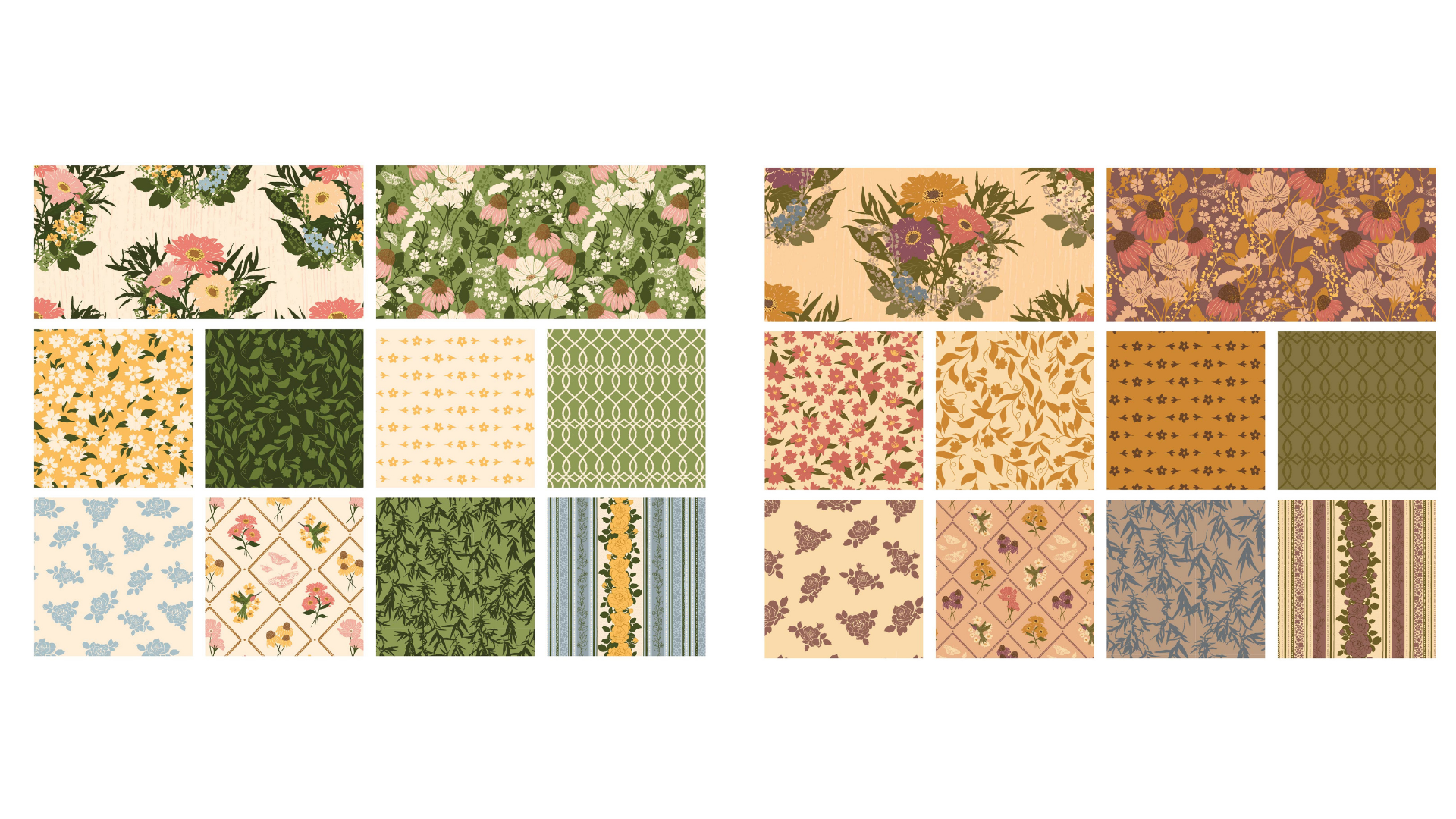
The course gave me the space, advanced tools, and encouragement to keep creating until my own voice naturally emerged. Today, when I look at my first pattern collection, I see a common thread running through it.
It is soft, story-filled, inspired by nature and designed to help everyday products feel a little more meaningful. That's something I struggled to see before. Now it's woven into everything I create.
Rediscovering the Joy of Creating Away From the Screen
One lesson that has stayed with me long after the course ended had very little to do with Adobe Illustrator.
It was about stepping away from the computer and going analog.
In a world where we're constantly scrolling for inspiration, Bonnie encouraged us to slow down and reconnect with the physical world around us. Instead of relying solely on Pinterest boards and Instagram, we learned to gather inspiration in more creative, hands-on ways.
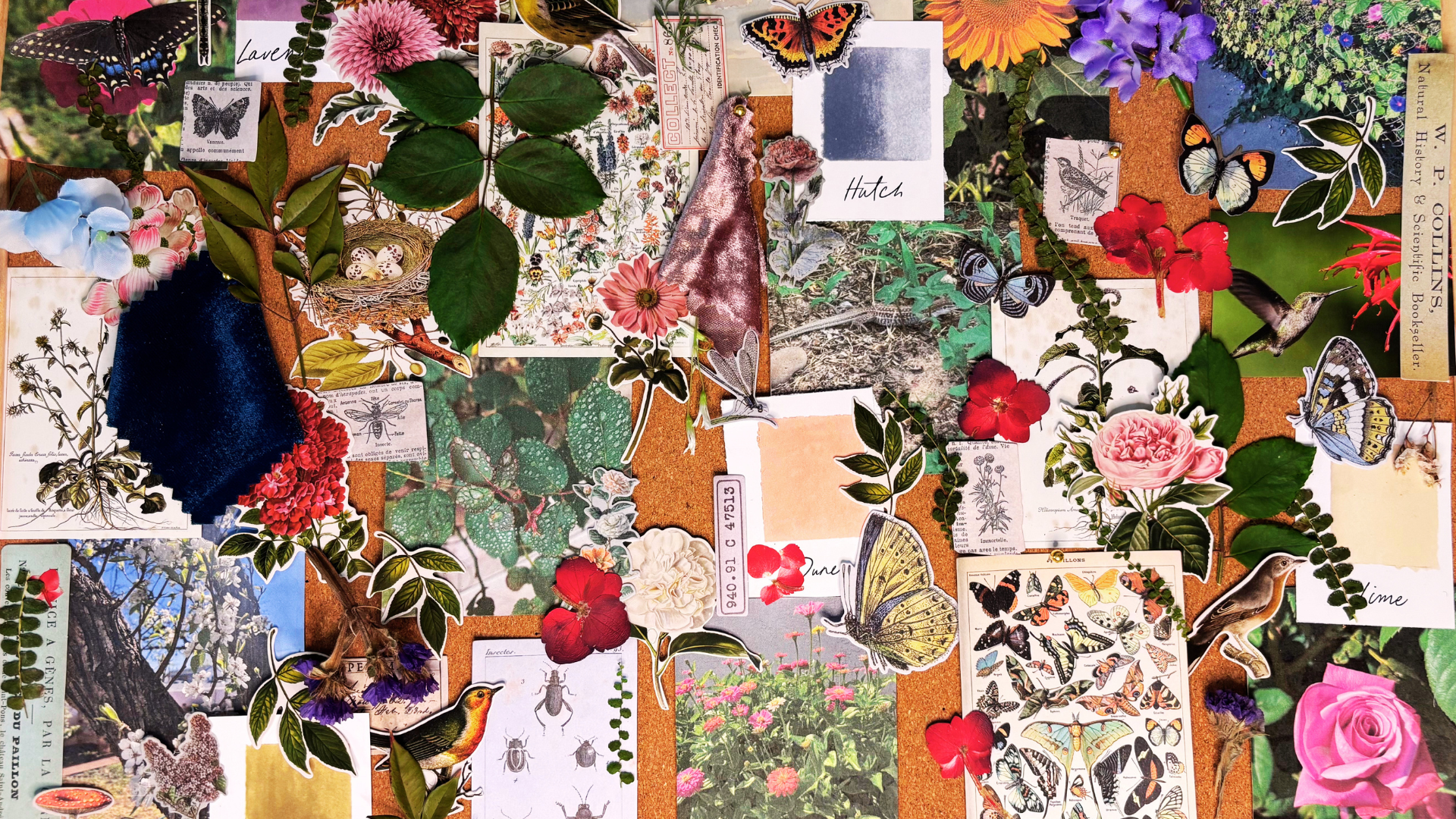
We created mood boards filled with magazine clippings, fabric swatches, pressed flowers, paint chips, handwritten notes, ribbon, photographs, and found objects (whatever we could find that helped create the narrative and frame of our pattern collection).
I spent time browsing libraries and bookstores (I haven’t stepped foot into a an actual bookstore in years), collecting beautiful books that sparked ideas. We wandered through gardens, antique shops, and nature trails, paying attention to the colors, textures, and little details that often go unnoticed.
There was something incredibly freeing about creating with my hands again before ever opening my laptop.
Those mood boards became more than collections of pretty images—they became the heart of a pattern collection's story. Instead of designing random motifs, I learned to build an entire visual world first. Every flower, leaf, bird, and color palette had a purpose because it was connected to my bigger story.
That process completely changed the way I approach my work.
Adobe Illustrator and Becoming Pitch-Ready
Even though I’ve already been working in Illustrator and Photoshop for quite some time as a graphic designer, I learned how to create professional vector artwork for surface design in Adobe Illustrator, create motifs, build seamless repeating patterns, develop cohesive collections, and understand the workflows used throughout the surface design industry. Those skills gave me the confidence to move from simply making art on my ipad to creating artwork that was ready for licensing and print-ready in the real world.
Aside from developing a professional portfolio and understanding licensing opportunities to preparing collections for presentation and pitching our artwork to companies, the course helped bridge the gap between being an artist and becoming a professional designer.
That combination of artistic growth, technical education, and business knowledge was incredibly empowering. It gave me the confidence not only to create work I was proud of, but also to believe it deserved a place out in the world and that there is room for me and my art too.
Where I Am Now
I'm working on building a portfolio of hand-drawn surface pattern collections with the goal of licensing my artwork to brands and boutique business owners. I have the dream of seeing my surface designs across industries like wallpaper, fabric, stationery, lifestyle products, and so much more!
Every collection I create feels more authentic than the last because it reflects the style I've worked so hard to discover and I’m so excited to see where this takes me. If you happen to be an art director and love my work featured in this post, please visit my portfolio.
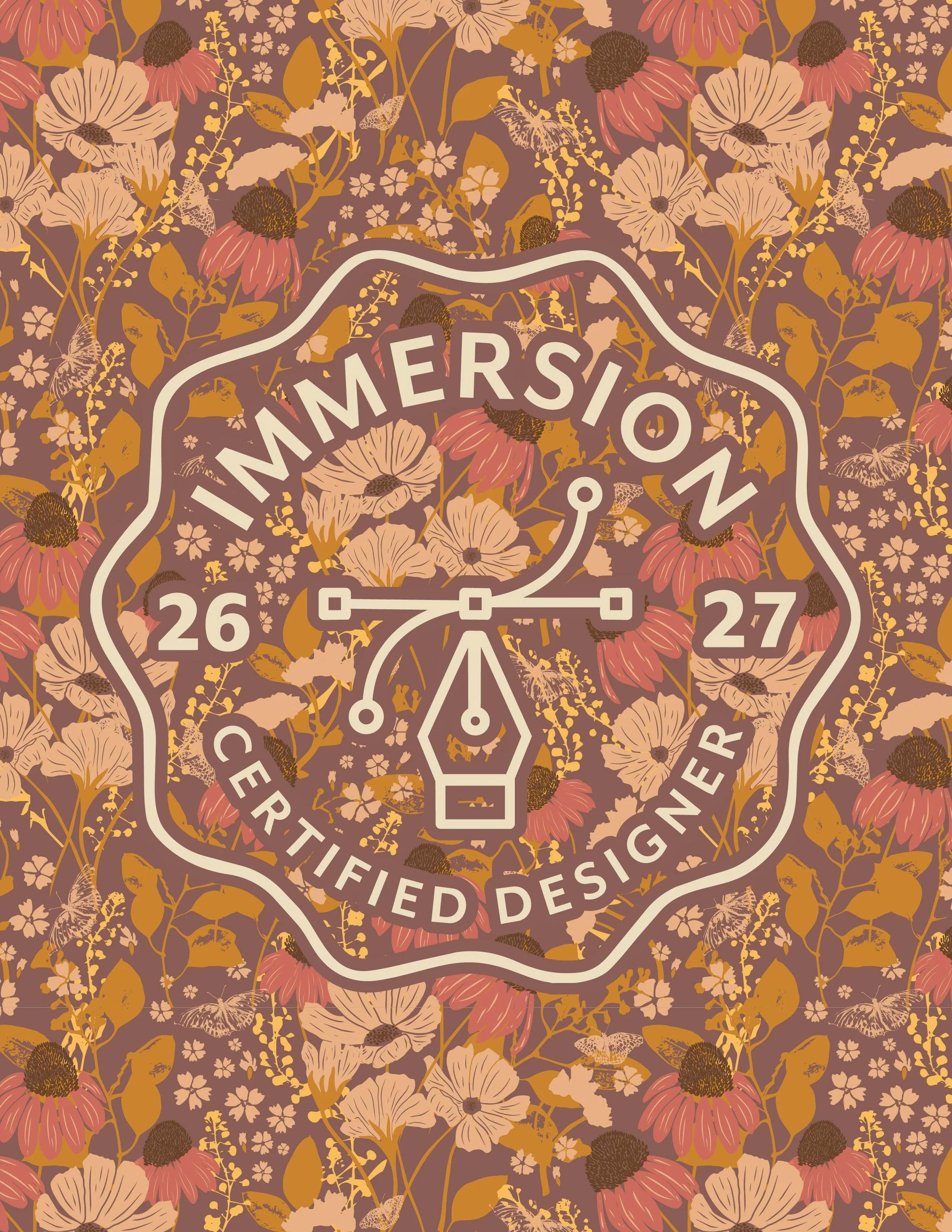
I also took the time after the course to take the certification exam and I’m ecstatic to say that I passed!! I’ve shared my certification badge below. I’m so proud of myself for earning this, staying focused, and motivated to keep learning and growing. You can learn more about what the certification represents at this link https://www.bonniechristine.com/certification
I’ve also been working on my Spoonflower shop. I’ve been adding my latest Enchanted Garden collection. More to come on that soon!
A few last notes to share
Every artist's journey looks different. This was about becoming more fully myself and chasing after something I’ve always wanted to do. And that's something I'll always be thankful for.
If you're standing where I once stood—wondering if you'll ever find your style or feel confident in your work—I hope this encourages you. Keep creating. Keep experimenting. Your artistic voice is already there. Sometimes, it just needs the right environment to bloom.
Even today, every collection I create begins away from the screen. I gather inspiration, write down ideas, collect books, photograph little moments that catch my eye, and build a physical mood board that tells the story I want my artwork to share.
Only then do I sit down to sketch and illustrate.
Ironically, stepping away from technology helped me become a better artist. It taught me that the strongest designs don't come from endlessly searching for inspiration online—they come from slowing down, observing the world with intention, and allowing your own experiences to shape the stories you tell.